The Net-Zero mirage: When bureaucracy ignores the science and the street
 By 2025, the Western world’s bureaucratic machinery is grinding toward its net-zero ambitions with the fervor of a crusade. By 2025, the Western world’s bureaucratic machinery is grinding toward its net-zero ambitions with the fervor of a crusade.
From Brussels to Washington, the mandates are multiplying: carbon caps, fuel quotas, emissions trading schemes, and sustainability certifications. Yet, beneath this regulatory avalanche lies a growing fissure - one that threatens to derail the entire climate agenda.
It’s not just economic resistance or technological lag. It’s the emergence of credible scientific evidence suggesting that carbon dioxide (CO₂), the villain of climate orthodoxy, may not be the unmitigated evil it’s been made out to be.
Indur Goklany’s report for the Global Warming Policy Foundation, endorsed by the late Freeman Dyson, argues that CO2’s non-climatic effects—enhanced plant growth, improved crop yields, and increased biospheric productivity - are not only real but beneficial. Goklany documents how elevated CO2 levels have contributed to agricultural abundance, reduced habitat loss, and improved water-use efficiency in plants. These effects, he claims, outweigh the speculative harms projected by climate models that often fail to account for local variability and adaptation.
Meanwhile, physicist William Happer has publicly argued that CO2 is a net positive for the planet, citing its role in photosynthesis and ecosystem vitality. Critics dismiss these claims as fringe science, but the data on global greening—satellite imagery showing increased vegetation cover—suggests there’s more to the story than bureaucrats care to admit.
On the other side, mainstream climate science remains firm: CO2 traps infrared radiation, warms the planet, and disrupts weather patterns. NASA and the IPCC warn of rising sea levels, extreme weather, and health risks from fossil fuel emissions. The consensus is clear - but consensus is not infallibility. Science evolves, and ignoring dissenting evidence is not prudence; it’s intellectual cowardice.
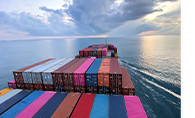
The maritime industry is a microcosm of this tension. As regulators push for decarbonisation, shipowners are scrambling to adopt alternative fuels. LNG (Liquefied Natural Gas) is the current front-runner, with over 1,300 vessels in operation and nearly 850 more on order. It reduces sulphur oxides (SOx), nitrogen oxides (NOx), and particulates, and benefits from a mature bunkering infrastructure. But methane slip—a leakage of unburned methane, a potent greenhouse gas—undermines its green credentials.
Methanol is gaining traction fast. With 58 vessels in operation and 320 on order, it offers easier handling and lower safety risks than LNG. It’s compatible with existing engines, but its toxicity and low flash point require careful oversight.
Ammonia, hailed as a zero-carbon fuel, is still in its infancy. Only four vessels are operational, with 45 on order. It emits no CO₂ when combusted, but its high toxicity and storage challenges make it a bureaucratic nightmare.
Hydrogen, the holy grail of zero-emission fuels, remains aspirational. With just 16 vessels in operation, its cryogenic storage requirements and production costs are formidable barriers.
Biofuels offer a drop-in solution using existing engines and renewable feedstocks like algae and waste oil. Yet scalability and sustainability remain unresolved.
Regulatory frameworks like FuelEU Maritime and IMO GHG targets are accelerating investment, but they also risk locking in suboptimal technologies. Bureaucrats favour fuels that tick compliance boxes, not necessarily those that offer the best long-term outcomes. The result? A fragmented fuel landscape where innovation is stifled by red tape.
The aviation sector faces similar hurdles. Sustainable Aviation Fuel (SAF) is the designated savior, with mandates kicking in across Europe and the US. The EU’s ReFuelEU regulation requires two per cent SAF at airports in 2025, rising to 70 per cent by 2050. The US SAF Grand Challenge aims for three billion gallons annually by 2030.
SAF can be produced from waste oils (HEFA), alcohol-to-jet (ATJ) routes, and Fischer–Tropsch synthesis. It’s compatible with existing engines and has been used in demonstration flights. But it’s expensive—three to 10 times the cost of conventional jet fuel—and supply remains minuscule, just 0.7 per cent of global jet fuel needs.
Despite its promise, SAF is caught in a bureaucratic bind. Tax credits are being scaled back, and blending limits restrict its deployment. The aviation industry is left juggling sustainability mandates with economic realities, while regulators remain fixated on compliance metrics.
This bureaucratic tunnel vision is symptomatic of what some call the “Deep State” mindset of playing “home court tennis,” where only preferred variables are considered, and inconvenient truths are sidelined. The CO2 debate is a prime example. Evidence of its benefits is dismissed not because it’s invalid, but because it’s politically inconvenient.
The rise of populist forces - Trump in the US, Farage in the UK, Le Pen in France - reflects a growing backlash against this bureaucratic overreach. These movements challenge the legitimacy of climate mandates that ignore economic hardship and scientific nuance. They are not fringe revolts; they are democratic expressions of skepticism.
The streets of the West are seething with demonstrators who reject top-down bans and mandates. They demand policies rooted in reality, not ideology. This is no 1380 Peasants’ Revolt. There is no king to snuff it out. The resistance is decentralized, persistent, and increasingly well informed.
The net-zero quest is not doomed, but it is misdirected. Bureaucracies must embrace scientific pluralism, economic pragmatism, and technological flexibility. CO2 is not a moral toxin; it’s a molecule with complex effects. Fuels should be judged not by their compliance scores but by their lifecycle impacts and scalability.
The Western world must choose: continue down a path of rigid mandates and selective science, or open the field to genuine debate and innovation. The future of climate policy - and democratic legitimacy - depends on that choice. |


