Looking at multipurpose, heavy lift options as state-induced recession dampens box business in 2023
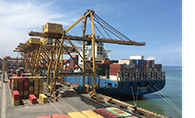 As we approach the third quarter, it is clear that the good old days of the Covid scare when container slots were sold at a premium and profits were stratospheric, are well and truly over. As we approach the third quarter, it is clear that the good old days of the Covid scare when container slots were sold at a premium and profits were stratospheric, are well and truly over.
This has brought about a sea change in the international shipping market, compounded by a recession in the in the world's leading economies and with tensions building between China and the West.
This brings about the question of whether it is wise to build bigger containerships or become more flexible and an consider deploying break-bulk and heavylift or perhaps multipurpose vessels.
To some, heavylift is the way to go because western governments for better or worse, are committed to the carbon craze and determined to end the use of fossil fuels. Most economists see this effort to save the planet, however laudatory in theory, is bound to impoverish the world, thus making consumers goods less affordable to most people in both what might be called the "de-developing world", but even in affluent nations of the OECD (Organisation for Economic Cooperation and Development). All of which doesn't make the prospects look good for containers.
So there may well be more action in the heavylift end of things as heavy lift often involves government funded expensive measures are taken to mitigate climate change. There is also energy uncertainty in the face of political conflict both with China and Russia.
And to the leftist government mind, "this has brought on a new urgency to the energy transition, and nations around the world are accelerating the planning and construction of onshore and offshore wind farms to replace fossil. As wind turbines grow in size, specialised ships are needed to transport their huge and heavy components," said the Oslo-based classification society, DNV.
Although bundled in with multipurpose ships, these have now been - quite sensibly - reclassified as "deck carriers".
Built for outsized wind turbine parts, wind turbine blades are now a commodity, manufactured in bulk. Ships need to be able to transport them in large numbers to make a show of keeping costs of large offshore wind farm projects to a minimum. “Deck carriers are designed specifically for this cargo,” said DNV ship hull expert Jan Rude. “The simplicity of this design makes them relatively inexpensive and easy to load, ensuring fast turnaround in port and lower port and freight costs.”
While these deck carriers are hardlly multipurpose, they have emerged as a high highly specialised, rather like gantry crane carriers,there are specific constraints for operation when loaded, such as acceleration limits, maximum wave height and weather conditions,” he said.
More conventionally, a multi-purpose vessel (MPV) is a seagoing ship that is built for the carriage of a wide range of cargoes, wood, steel, building materials, rolls of paper and bulk cargo.
Multi-purpose vessels can be divided into four categories: vessels with and without cargo gear, coastal trade liners and sea-river vessels. Bigger multi-purpose vessels are able to carry different kinds of loading on the same voyage. Smaller multi-purpose vessels do not have this advantage but they are employed to get into smaller harbours because of their limited draught.
Because of their varying operating conditions, these ships have complex designs that are difficult to build. Their all-round design must be able to carry heavy loads, large objects and unitised cargo as bulk cargo. These cargoes can be rolled or lifted on board so this requires different types of loading gear.
According to DNV, there are some 15,000 MPVS in existence and they range in size from small coastal vessels up to large ships with a heavy lift capability.
London's Drewry Maritime Research has spoken positively about the prospects of MPVs in 2023. While multipurpose vessel rates are expected to soften through 2023, the rate of decline is expected to be less than in competing sectors such as containerships and handysize dry bulk carriers.
Last year started with charter rates in all three main dry cargo sectors at unprecedently high levels, peaking in 1Q22. At that point containership rates were 900 per cent higher than 2Q20 (the lowest point in the market over recent years), bulk carrier charter rates were 200 per cent higher and MPV rates up almost 150 per cent. But from that point there was only one way for them to go.
From the peak at the beginning of the year charter rates in the container shipping sector lost almost 80 per cent of their value to end November 2022 and handy bulk carriers 50 per cent. The MPV sector is, however, doing better – at least for the heavylift-capable sector – with long-term charter rates down just 10 per cent from their peak.
The reasons behind this are largely to do with the demand for these vessels and the particular mix of cargoes that they can lift, said Drewry. The MPV sector benefitted for much of the year from spill over cargo that was a by-product of widespread supply chain disruption. As those issues have unwound, project cargoes (from both the renewables and oil and gas sectors) have underpinned the loss in demand.
For the first time in some years, the total MPV fleet recorded growth last year and is likely to do so again in 2023. This is due to the low demolition sales reported over 2022, although this was not surprising given the peak in charter rates. However, even so, given the impending IMO regulations on emissions and carbon reductions, we had expected a few more vessels to head to the wrecking beaches.
Drewry expects demolition rates to rise through 2023 back to pre-pandemic levels, on weaker earnings and increasing costs of looming emission regulations. However, most vessel candidates will be smaller craft at less than 10,000 dwt and not heavylift capable.
Conversely, the majority of newbuilding orders are for the larger heavylift capable vessels. The net effect will be fleet growth of 1.2 per cent in 2023, but the non-heavylift fleet will effectively stagnate while the heavylift capable vessels are expected to see a rise of 2.5 per cent in deadweight terms.
Modest fleet growth and rising competition for breakbulk and project cargo in the face of a weakening global economy will depress MPV charter rates through 2023. But the decline in rates will be less marked than anticipated for the competing sectors of containerships and dry bulk carriers.
Given the highly specific circumstances in which each carrier finds itself, it is impossible to settle on a one size fits all approach as each player exists in this own specific economic and political terrain and must fight his own corner. One thing is clear: Politics will likely trump economic factors this year and the next, and one must be ready to pivot in unexpected directions, a situation that puts the accent of flexbility. |