Can Cape diversions anchor Africa’s economic future?
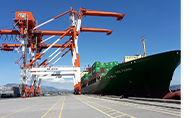 When Houthi attacks in the Red Sea disrupted shipping through the Suez Canal, global trade routes were forced to adjust. The diversion of vessels around the Cape of Good Hope was initially seen as a costly detour, adding days to voyages and raising freight rates. When Houthi attacks in the Red Sea disrupted shipping through the Suez Canal, global trade routes were forced to adjust. The diversion of vessels around the Cape of Good Hope was initially seen as a costly detour, adding days to voyages and raising freight rates.
Yet for sub-Saharan Africa, this disruption created an unexpected opportunity. Ports that had long been bypassed suddenly found themselves on a main artery of global commerce, and the question now is whether this temporary shift could become a lasting economic advantage.
Evidence suggests that cargo volumes have already risen in several African ports. Mombasa in Kenya reported a double-digit increase in throughput in 2024, with transit traffic to Uganda and Rwanda climbing sharply. Durban, South Africa’s largest container hub, has seen more Asia–Europe vessels calling, reinforcing its role as a logistics anchor for the region.
Cape Town has also benefited, though weather-related delays remain a challenge. In West Africa, Lome in Togo has emerged as a transshipment powerhouse, serving landlocked countries such as Mali, Niger and Burkina Faso. Tema in Ghana and Abidjan in Cote d’Ivoire have expanded container capacity to compete for regional dominance, while Nigeria’s Lekki Deep Sea Port, a US$1.5 billion project backed by Chinese financing, is positioning Lagos as a modern hub capable of handling larger vessels.
These gains have coincided with major infrastructure investments. China’s Belt and Road Initiative has poured billions into African ports and railways, financing projects such as Kenya’s $3.6 billion Mombasa–Nairobi Standard Gauge Railway.
Tanzania’s planned Bagamoyo Port, though stalled, reflects the scale of ambition, with a projected cost of $10 billion. Western-backed projects are also rising, most notably the Lobito Corridor, a $1.3 billion railway linking Angola, Zambia, and the Democratic Republic of Congo to the Atlantic. Private sector players such as DP World and APM Terminals have modernised facilities in Abidjan and Tema, showing that Africa is attracting diverse sources of capital. The mix of financing suggests that the continent is no longer dependent on a single partner, though Chinese loans remain dominant.
Yet the opportunities created by Cape diversions are tempered by structural risks. Congestion is one of the most pressing. Conakry in Guinea has median waiting times of more than 12 days, Beira in Mozambique averages over a week of delays, and Mombasa faces nearly six days of waiting despite expansion efforts. Dar es Salaam averages three days, while Durban and Cape Town struggle with inefficiencies and weather disruptions.
These bottlenecks raise costs, discourage shipping lines from making additional calls, and erode competitiveness. Without investment in logistics and hinterland connectivity, the gains from increased traffic will remain temporary.
Governance challenges compound the problem. Corruption and inefficiency plague many ports, undermining trust and efficiency. At Lagos, clearing agents report routine bribes to customs officials, illegal toll points, and trucks queuing for weeks on poor access roads. In Maputo, corruption drove cargo away until reforms took hold.
Weak regulatory frameworks, missing goods, and extortion are common complaints across the region. Even when infrastructure is upgraded, governance failures often cancel out efficiency gains. Digitisation and transparency reforms are urgently needed to ensure that ports operate as genuine gateways to trade rather than choke points of inefficiency.
Debt risks are another obstacle. Heavy reliance on Chinese loans raises sustainability concerns, particularly when revenues are undermined by congestion and corruption. Kenya’s Standard Gauge Railway loan strained public finances, Ethiopia’s Chinese-financed rail projects face repayment difficulties, and Tanzania’s Bagamoyo Port was shelved amid fears of debt dependency. Analysts warn that reliance on Chinese financing risks creating dependency and sovereignty issues, especially if countries struggle to service loans. The fear of “debt traps” is not unfounded, and without diversified financing sources, Africa risks mortgaging its future for short-term gains.
West Africa deserves special attention. With Europe-bound vessels rounding the Cape, ports such as Lome, Tema, Abidjan and Lagos are strategically positioned to capture trade flows. Lome has already become a transshipment hub for landlocked countries, while Lekki Deep Sea Port is designed to handle 2.5 million TEU annually.
If governance and logistics improve, West Africa could rival East Africa as the continent’s trade gateway. The region’s proximity to Europe gives it a natural advantage, but only if it can overcome the same structural challenges that have long plagued African trade.
The Cape diversions have given Africa a rare chance to reposition itself in global commerce. Cargo volumes are rising, infrastructure investments are flowing, and ports from Durban to Lome are gaining prominence. Yet congestion, corruption, and debt risks threaten to turn this opportunity into another missed chance. For Africa to convert temporary shipping windfalls into lasting development assets, three steps are essential.
Investment in hinterland connectivity must match port capacity, governance reforms must tackle corruption and inefficiency, and financing must be diversified to avoid debt traps. If these reforms are embraced, the Cape diversions could mark not just a detour in global shipping, but a turning point in Africa’s economic destiny. |


