Why rail and ocean consolidation should alarm shippers
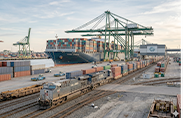 Two consequential infrastructure transactions are advancing in parallel, in separate industries, but with a single purpose: secure assets and expand control. Two consequential infrastructure transactions are advancing in parallel, in separate industries, but with a single purpose: secure assets and expand control.
In rail, Union Pacific and Norfolk Southern are pursuing an US$85 billion merger that would unite UP’s western network with NS’s eastern footprint into a single system spanning 43 states.
The Surface Transportation Board rejected the initial application in January as incomplete, but the carriers have pledged to refile.
In ocean shipping, Ocean Network Express has agreed to increase its ownership stake in Poseidon Corp - parent company of Seaspan Corporation, the world’s largest independent containership lessor to 48.9 per cent.
ONE, a Singapore-based joint venture of three Japanese shipping conglomerates, is positioning itself to exert influence over the tonnage platform that virtually every major carrier depends on. Meanwhile, Hapag-Lloyd has announced a $4.2 billion acquisition of ZIM Integrated Shipping Services, creating a combined fleet exceeding 4.8 million TEU. Together, these moves signal a synchronized compression of freight infrastructure across two modes.
The surface details differ, but the underlying logic is identical: dominant players are consolidating control of the infrastructure layer that competitors rely on. In rail, the infrastructure being consolidated is the network itself. A UP-NS combination would create a single operator controlling track, terminals, and dispatch authority across the breadth of the United States.
For shippers who benefit from UP-NS interchange competition on transcontinental lanes, the merger eliminates a competitive option that cannot be recreated once it closes. In ocean shipping, the infrastructure being consolidated is the tonnage platform.
Seaspan owns 241 vessels with more than 2.5 million TEU of capacity and charters them to virtually every major container line. ONE’s near‑half ownership of Poseidon is not about acquiring ships directly.
It is about acquiring a structural position in the platform that determines which carrier gets which vessel, at what charter rate, and on what timeline. The rail analog is TTX Company, the carrier-owned flatcar cooperative whose shareholders - BNSF, UP, NS among them - own the equipment pool that competitors must also rent. ONE’s Seaspan stake is the TTX play, extended to the vessel market.
ONE’s decision to stop at 48.9 per cent ownership is deliberate. Crossing the 50 per cent threshold would likely require consolidation of Poseidon’s debt-heavy balance sheet onto ONE’s financial statements and would reframe the transaction from a minority investment to a control acquisition.
That shift would invite harder antitrust scrutiny in Japan and the EU. At 48.9 per cent, ONE secures board influence and fleet planning access without pulling those regulatory triggers. The equity is entirely private. Atlas Corp, Seaspan’s parent company, was delisted in 2023.
The primary seller was Fairfax Financial Holdings, run by Prem Watsa, which sold a 23.2 per cent stake but retains 22.1 per cent of Poseidon. Watsa is choosing his partner, not his exit. Any future move toward majority control runs through him and the remaining insiders - on their timeline, at their price.
Individually, neither the UP-NS merger nor the ONE-Seaspan stake is disqualifying. Considered together - alongside Hapag-Lloyd’s pending acquisition of ZIM - they describe a synchronized compression of freight infrastructure across two modes simultaneously.
Shippers with rail exposure on transcontinental lanes face a market in which UP and NS no longer compete at interchange. Shippers dependent on ocean capacity face a market in which the largest vessel lessor is approaching control by one of its own customers.
For manufacturers, retailers, and agricultural exporters moving product across both modes - which describes most significant US freight - the implications compound. The STB’s rejection of the UP-NS application signals that rigorous competitive impact analysis is required before major rail transactions proceed. No equivalent process exists for the ONE-Seaspan transaction in the United States.
The Federal Maritime Commission has limited authority over foreign vessel ownership structures. The transaction will be decided in Tokyo, Brussels and Hamilton - not Washington.
This asymmetry matters. Rail consolidation faces years of public hearings, environmental reviews, and competitive impact studies. Ocean consolidation, by contrast, proceeds largely outside US jurisdiction. The world’s seven largest container lines - MSC, Maersk, CMA CGM, Cosco, Evergreen, Hapag-Lloyd, and ONE - all rent tonnage from Seaspan. ONE’s move to control that platform has not appeared in headlines, but it is arguably as consequential as the UP-NS merger.
The difference is that one transaction faces rigorous scrutiny, while the other faces comparatively limited oversight from authorities with real enforcement power over the US freight market. The result is a freight landscape in which shippers may lose competitive options in both modes simultaneously.
Rail shippers lose interchange competition. Ocean shippers face a vessel leasing platform increasingly controlled by one of its own customers. The combined effect is a narrowing of choices for those who depend on both modes - a category that includes nearly every major US exporter and importer.
The infrastructure consolidation story of 2026 is not being told as a single story. It should be. Two modes. Two mechanisms. One direction. The dominant players in rail and ocean freight are moving to consolidate control of the infrastructure layers that competitors depend on.
The implications for shippers are profound, and the regulatory asymmetry between the two transactions is striking. Rail faces rigorous scrutiny. Ocean does not. Yet both will reshape the competitive landscape in ways that compound for those who rely on both modes. For policymakers, the lesson is clear: infrastructure consolidation cannot be understood in isolation.
Rail and ocean freight are interdependent. Shippers move product across both. When consolidation occurs in both simultaneously, the competitive impact multiplies. To treat these transactions as separate stories is to miss the larger narrative. The infrastructure consolidation story of 2026 is a single story. It is unfolding now. And it demands attention. |