Court ruling against Hutchison and Beijing canal holdings
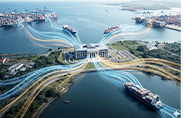 Panama’s Supreme Court decision to annul CK Hutchison’s long-standing concessions to operate the Balboa and Cristóbal container terminals has reverberated far beyond the isthmus. Panama’s Supreme Court decision to annul CK Hutchison’s long-standing concessions to operate the Balboa and Cristóbal container terminals has reverberated far beyond the isthmus.
At first glance, the ruling appears to be a straightforward matter of constitutional law: the court declared that the legal framework underpinning the 1997 concession and its 2021 extension was unconstitutional.
Yet the timing, the geopolitical context, and the immediate consequences suggest that this was not merely a legal correction but a strategic maneuver to free Panama from the tightening grip of Chinese influence over one of the world’s most critical maritime chokepoints.
For nearly three decades, Hutchison’s subsidiary, Panama Ports Company (PPC), controlled both ends of the canal. The 1997 concession was extended in 2021 for another 25 years, embedding Hutchison’s role deep into Panama’s logistics landscape.
However, Panama’s Comptroller had raised concerns as early as 2015, alleging unpaid amounts, accounting irregularities, and even a “ghost” concession operating within the ports. These issues, while serious, had been tolerated for years. Why then did the Court act decisively in 2026? The answer lies in the intersection of law, politics, and geopolitics.
The ruling coincided with CK Hutchison’s attempt to divest its global port portfolio, valued at over US$22 billion, to a consortium led by BlackRock and MSC’s Terminal Investments Ltd. Hutchison’s intent was clear: to reduce exposure to Chinese political leverage and rebalance toward Western-aligned investors.
Yet Beijing, through COSCO Shipping, insisted on a substantial role in any consortium that acquired Hutchison’s Panama assets. Reports indicated COSCO demanded veto rights or equivalent powers, ensuring it could block decisions unfavorable to China. In effect, Hutchison could not fully escape Beijing’s influence without COSCO’s consent.
This demand alarmed Washington. The United States has long viewed Chinese control of strategic infrastructure in the Americas as a national security risk. COSCO’s insistence on a controlling role in Hutchison’s sale was seen as an attempt to maintain Chinese leverage over both ends of the canal.
Against this backdrop, Panama’s Supreme Court ruling looks less like a coincidence and more like an expedient move to sever ties with Hutchison and, by extension, COSCO.
The immediate consequences were dramatic. Panama awarded temporary 18-month contracts to APM Terminals (Maersk) for Balboa and TIL Panama (MSC) for Cristóbal, ensuring operational continuity while signaling a pivot toward Western operators.
Hutchison, meanwhile, expanded its arbitration claims to over $2 billion, alleging unlawful seizure of facilities and confiscation of company documents. China reportedly retaliated by detaining Panama-flagged vessels, raising concerns about global shipping disruptions. What began as a domestic legal ruling quickly escalated into an international confrontation.
Experts have lined up on both sides of the debate. Supporters of the ruling argue that Panama acted to safeguard sovereignty and reduce Chinese control. Commentators in U.S. and Panamanian policy circles hailed the annulment as a “major victory for the US” and a bold assertion of Panama’s independence. By transferring operations to Maersk and MSC, Panama aligned itself with Western operators, reducing Beijing’s leverage over the canal. The audit findings provided legal cover, but the strategic intent was unmistakable.
Critics, however, warn of serious risks. Trade and shipping experts caution that annulling a nearly 30-year concession sets a dangerous precedent, undermining investor confidence. If Panama can retroactively void contracts, foreign investors may hesitate to commit capital to its infrastructure projects. The abrupt transition also raised concerns about operational disruption.
Fort Lauderdale's Maritime Executive noted that Panama had to “occupy” Hutchison’s terminals immediately after the ruling to guarantee continuity, a move that underscored the fragility of the handover. Legal risks loom large as well. Hutchison’s arbitration claims could saddle Panama with billions in damages if international tribunals side with the company.
The COSCO factor complicates matters further. Analysts point out that China’s insistence on a controlling role in Hutchison’s sale reinforced perceptions that the court’s ruling was partly a geopolitical expedient.
Reuters and the Wall Street Journal reported that China threatened to block Hutchison’s global port sale unless COSCO secured a stake. In this light, Panama’s decision can be seen as a preemptive strike to prevent Beijing from entrenching its influence over the canal through corporate maneuvering.
The broader context is one of intensifying US–China rivalry. The Panama Canal is not just a commercial artery; it is a strategic asset. Control over its terminals carries implications for global trade, military logistics, and geopolitical leverage.
By reallocating operations to Maersk and MSC, Panama signaled a clear alignment with Western interests. China’s retaliatory detentions of Panama-flagged vessels highlight the risks of such a pivot, but they also underscore the stakes. This is not merely a dispute over unpaid fees or accounting irregularities; it is a contest over who controls the gateways to the canal.
In the end, the Supreme Court’s ruling reflects Panama’s effort to reassert sovereignty over strategic infrastructure. Whether it was primarily a legal correction or a geopolitical maneuver, the effect is the same: Hutchison’s nearly three-decade control has ended, COSCO’s ambitions have been thwarted, and Panama has repositioned itself in the global balance of power.
The risks are real - arbitration claims, investor skepticism, and potential shipping disruptions - but so are the rewards: greater autonomy, alignment with Western operators, and reduced vulnerability to Chinese leverage.
The case illustrates the complex interplay of law, commerce, and geopolitics in the 21st century. Contracts and concessions are not merely legal instruments; they are levers of influence in a world where infrastructure is power.
Panama’s Supreme Court may have acted on constitutional grounds, but the ruling resonates far beyond the courtroom. It is a reminder that sovereignty is not just about borders - it is about control of the arteries through which global trade flows. In choosing to annul Hutchison’s concessions, Panama has made a statement: the canal belongs to Panama, not to Beijing, and certainly not to any company that would compromise its independence.
As arbitration proceeds and geopolitical tensions simmer, the world will watch closely. The Panama Canal remains a vital link in global commerce, and its governance is a matter of international concern.
Whether Panama’s bold move will be vindicated or punished in the courts of law and public opinion remains to be seen. But one thing is clear: the Supreme Court’s ruling was not just about constitutional irregularities. It was about sovereignty, strategy, and the shadow of China. |